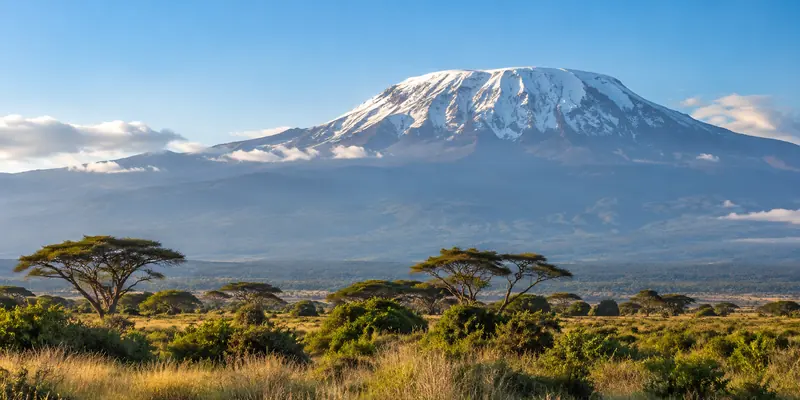
Mount Kilimanjaro
Roof of Africa
Mount Kilimanjaro Climb, 7 Days
Seven days on the Machame route to Uhuru Peak (5,895 m), the highest point in Africa, with time built in to acclimatise.
From USD 2,350per person sharingView trip
Travel guide
Machame, Lemosho, Marangu, Rongai and the Northern Circuit compared.
Updated 15 October 2026
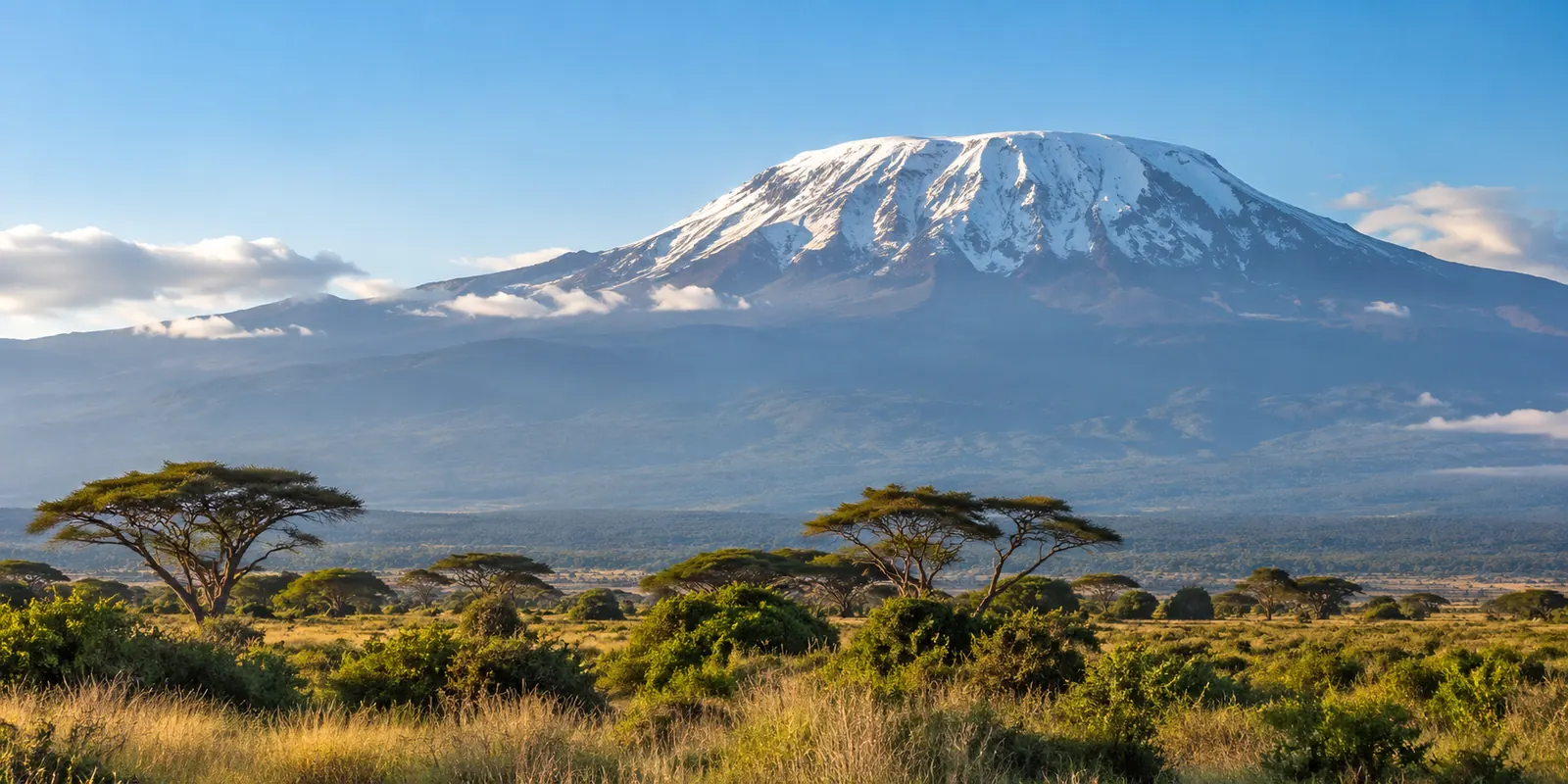
Kilimanjaro (5,895 m) needs no ropes or technical skills, but altitude is the real challenge. The more days a route gives you, the better your body adjusts and the better your chance of reaching Uhuru Peak.
The most popular route, through rainforest, across the Shira plateau and up the Barranco Wall. It climbs high and sleeps lower, which helps with acclimatisation. Our Roof of Africa climb uses the 7-day Machame route.
Starts in the quiet west and joins the Machame route on the Shira plateau. The extra day and fewer people make it one of the best choices if you have the time.
The only route with mountain huts instead of tents. It is shorter, which leaves less time to acclimatise.
Climbs from the north near the Kenyan border. It is drier, which helps in the rainy months, and gentler, but less scenic.
The longest route, circling the north side of the mountain, with the most time to acclimatise.
The best months are January to mid-March and June to October, when the weather is drier. April and May are the wettest months.
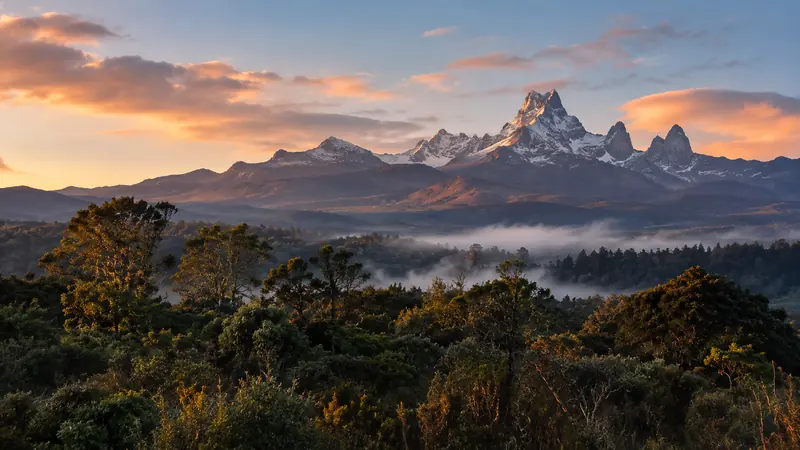
Mount Kenya's trekking peak, Point Lenana (4,985 m), is lower and quieter, and the scenery of lakes and jagged peaks is spectacular. Our Point Lenana trek takes five days from Nairobi.
Mount Kilimanjaro
Mount Kilimanjaro Climb, 7 Days
Seven days on the Machame route to Uhuru Peak (5,895 m), the highest point in Africa, with time built in to acclimatise.
Mount Kenya
Mount Kenya Trek, 5 Days from Nairobi
Climb Africa's second highest mountain to Point Lenana (4,985 m), up the Sirimon route and down through the Chogoria gorges.